

VETIQ Glucosamine Hip & Joint Chews were the first joint supplement I bought for Biscuit, and I want to tell you plainly what they did and did not do. Biscuit is my 10-year-old yellow Lab, about 78 pounds, and our vet found mild arthritis in both hips at his September 2025 checkup. She said to start with a joint supplement, keep him lean, and take steady short walks. I drove home, got on Amazon, and picked the VETIQ tub because it was the low-cost well-reviewed option with 180 soft chews. I gave it the label amount for his weight, which our vet checked. That was the plan. This is the honest review of how it went.
I am not a vet. I am a high school soccer coach in Marietta, Georgia, with a pickup truck, a camper shell, and a dog who used to come on every camping trip. I know stiff joints from twenty years of yelling on a sideline, but I cannot diagnose your dog. What I can do is tell you what I saw in my own house, on my own laminate floor, with my own dog. That is the whole point of this review.
The Quick Verdict
A fair low-cost first step for a stiff older dog who will take a soft chew, but the change in Biscuit was small and it did not get him back into the truck.
Amazon Check Today's Price →The Budget Starting Point I'd Still Mention to a Friend
VETIQ is not the formula Biscuit ended up on, but it was a fair first three months. If your vet has cleared a joint supplement and you want a low-cost place to start, look at the label and the serving size for your dog's weight.
Amazon Check Today's Price on Amazon →How I've Used It
Our vet's September 2025 diagnosis was mild arthritis in both hips. Biscuit was nine then. He had been slowing down on the four brick steps to the back yard and hesitating before he jumped into the truck. Nothing dramatic, just a dog who took a beat longer than he used to. She said a joint supplement was reasonable, along with the weight loss and the walks. I bought the 180-count tub of VETIQ that same week.
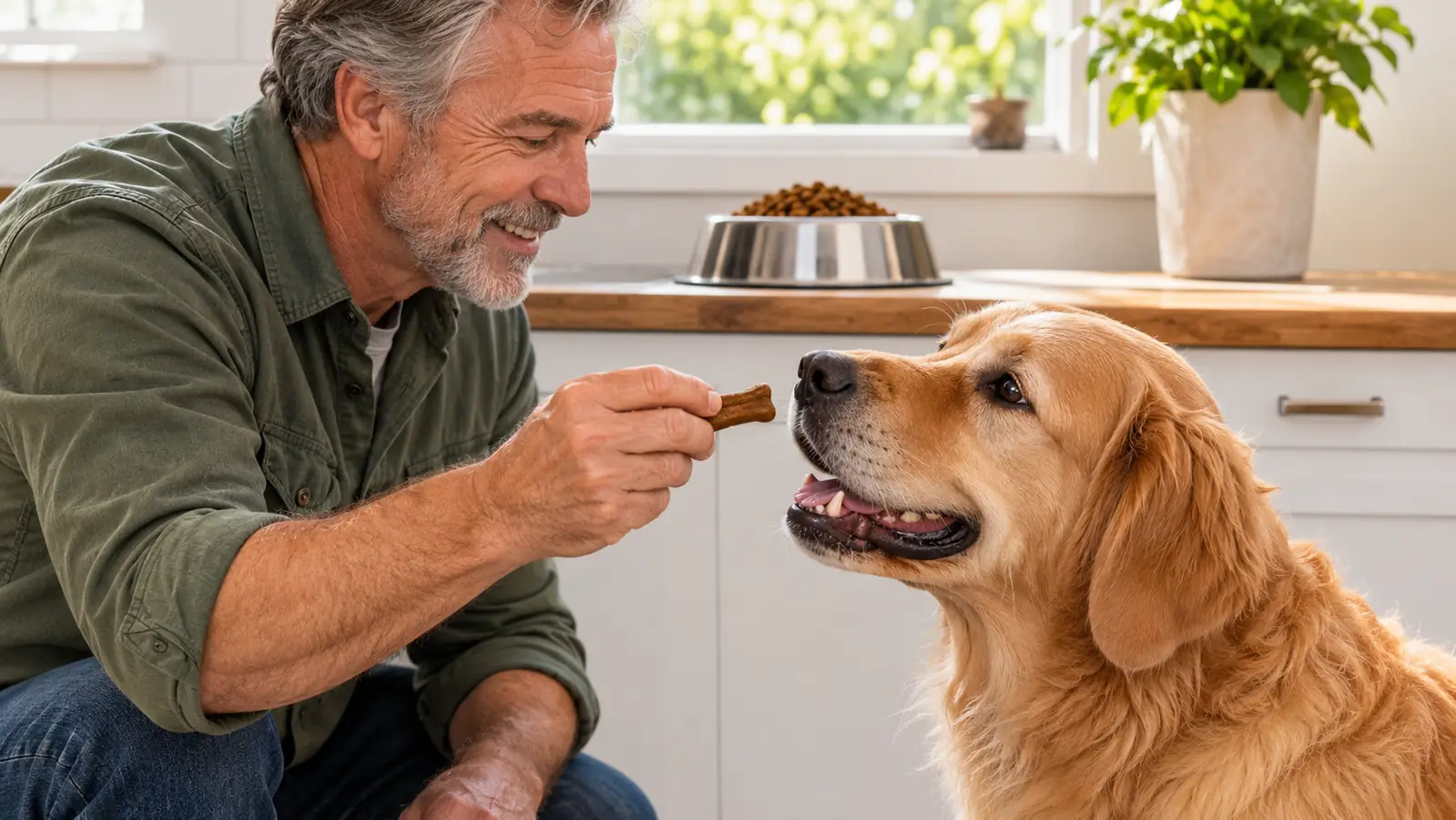
The chews are soft and chicken flavored, which mattered because Biscuit is not a dog who will eat a pill if he can spit it out. He took them like a treat after dinner. I gave him the label amount for his weight, and our vet checked that amount at the next visit. We ran it from September to early December 2025, about three months. No missed days that I can remember. I kept the tub on the counter by the kibble so I would not forget.
I stopped in December because our vet suggested a more studied formula at the recheck. That is not a knock on VETIQ. It is just what happened. She looked at Biscuit, asked how he was doing, and said she would rather see him on something with a clearer research trail. I followed her advice. VETIQ has not been part of his routine since. I still think it was a fair place to start, and I would say the same to a friend.
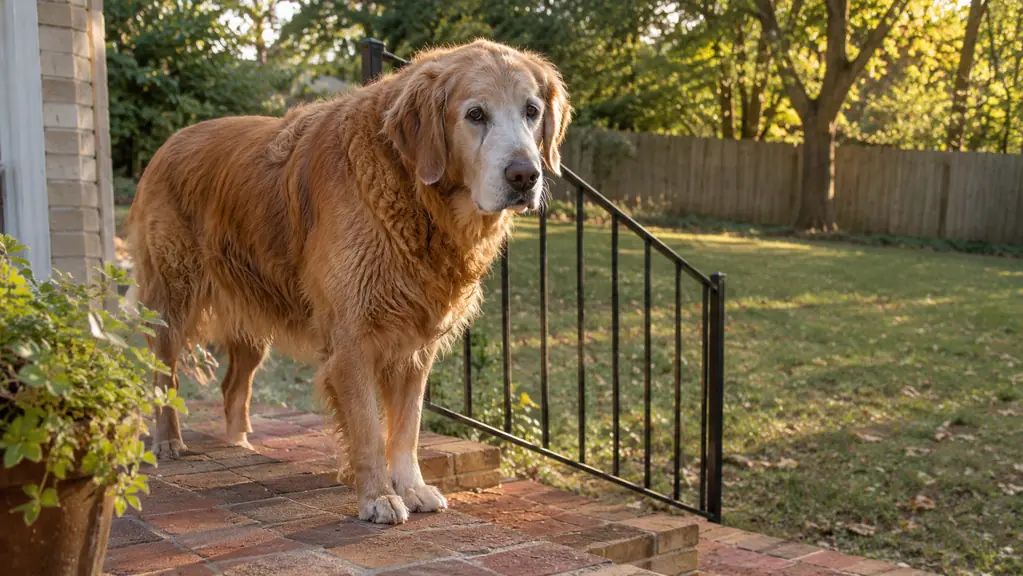
Our house is a single-story ranch with four brick steps down to the fenced back yard. That became my daily gauge. He would stand at the top, look down, and take a breath before he went. On the laminate in the hall, his nails would click and then pause. That pause is what I watched. It is not a scientific measure, but it is the measure I had.
What The Label Actually Tells You
The tub lists glucosamine, MSM, krill and fish oil. The title says glucosamine hip and joint chews with MSM and krill, 180 count. The label calls them soft chews and chicken flavored. That is the product. I am not going to dress it up as a prescription or a cure. It is a blend in a chew, and the serving is on the label. For a dog Biscuit's size, I used the label amount our vet checked.
Here is what I watch for in any joint chew. Does the dog actually eat it. Does the label give a clear serving for his weight. Does the ingredient list match what the front of the tub promises. VETIQ passed the first two for us. Biscuit ate it without a fight, and the serving was clear enough that I did not have to guess. The third one is where you have to read for yourself. The front says glucosamine, MSM and krill. The label is the place to confirm what is inside. I am not a chemist and I am not going to pretend a label read is the same as a clinical trial.
The other thing nobody tells you is that a big tub can feel like a commitment. 180 soft chews is a lot of chews. If your dog turns his nose up at the first one, you are stuck with a tub. Biscuit is a Labrador, so that was not my problem. He would eat a chew that tasted like a flip-flop if I handed it to him. A pickier dog is a different story. Buy the smallest size you can find first, or ask for a sample from your vet if they have one.
I kept the tub on the counter next to the kibble, not in the pantry. That was deliberate. If it is out of sight, I forget. The chews are soft, so I did not have to crush them or hide them in peanut butter. I just put the label amount on top of his morning kibble or handed it to him after dinner. He thought it was a treat. That is the whole administration routine.
The Six-Week Mark Is Where I Started Paying Attention
Around week six, I noticed something small. Biscuit was getting off the laminate in the living room a little easier in the morning. Not jumping up. Not trotting. Just less of that pause where he would gather himself before he stood. I noticed it because I was looking for it. That is the honest version. When you spend money on a supplement, you want to see something, and you can talk yourself into a change that is not really there.
The truck was the test I trusted more. Biscuit had been hesitating before he jumped into the back seat of the cab. He would put his front paws up, stop, and then decide. Around week six, he was still stopping. He was still thinking about it. The pause was maybe a little shorter, but it was there. That told me VETIQ was not nothing, and it also told me it was not enough. If your dog is still balking at the truck after six weeks, do not ignore that. Call your vet and talk about next steps.
By early December, the morning was a little smoother and the truck was still a hill to climb. That is the whole result. I know people want a dramatic story. I do not have one. Biscuit was a nine-year-old Lab with arthritis, and VETIQ gave him a small nudge. It did not turn him back into a two-year-old. I would be lying if I said otherwise.
The first two weeks I saw nothing. I want to say that because it is true. If you are expecting a change in three days, you will be disappointed. The first thing I noticed was not a jump or a run. It was the morning stand. That is a small thing unless you are the one watching for it every day.
By week six, Biscuit was getting off the laminate a little easier in the morning. By December, he was still hesitating at the truck.
What Nobody Tells You About A Low-Cost First Step
The case for VETIQ is simple. It is a low-cost way to start a joint supplement without turning your kitchen into a pharmacy. The chews are soft, the flavor is chicken, and the tub lasts. If your vet says a joint supplement is reasonable and you want to try something before you spend more on a formula with a longer research trail, VETIQ is a fair first step. That is the value pick argument, and I think it holds.
The case against it is just as simple. A low-cost first step is still a step you have to take every day for six to eight weeks before you know anything. If you are not going to be consistent, the chew does not matter. I put the tub by the kibble and gave it after dinner every night. That is the only reason I can tell you what happened at week six. If the tub had gone into the pantry, I would have no review to write.
The other thing nobody tells you is that a modest result is the most likely result. The ratings on Amazon are high, and I understand why. The chews are easy to give, the tub is low-cost, and some dogs do seem to move better. But ratings are not a study of your dog. Your dog is the only dog you can judge. If you see a small change at week six, that is a small change. It is not a cure, and it is not a reason to skip the vet.
Value is not the same as low cost. Value is whether the thing does enough to justify the daily ritual. For us, VETIQ did enough to justify three months and not enough to justify a year. That is a fair trade if you are starting out. It is a bad trade if you are further along and you need more. Only you and your vet can decide which one you are.
Where VETIQ Fit In Biscuit's Timeline
I want to be clear about the sequence because it is easy to mix up. VETIQ was the first joint supplement Biscuit ever took, from September to early December 2025. In December, our vet moved him to Cosequin DS. In March 2026, she moved him to Dasuquin MSM soft chews. He is on Dasuquin now, with a pause in July and early August 2026 while his mouth healed after a tooth extraction. He also gets a liquid fish oil on his morning kibble. That is the current routine. VETIQ is not part of it.
I am not going to pretend this was a head-to-head trial. It was not. I did not run Biscuit on VETIQ and Cosequin at the same time. I did not have a placebo. I had one dog, one vet, and a calendar. The only reason I can say VETIQ helped a little is that I watched him every morning and I know what he looked like before. The only reason I can say it was not enough is that he still hesitated at the truck. That is the limit of my evidence, and I am not going to stretch it.
If you are comparing VETIQ to a more expensive formula, do not let anyone tell you the lower-cost one is the same. It is not the same. It is a different label with a different ingredient list and a different research trail. That does not make it bad. It makes it a first step. If your dog is early in the stiffness and your vet says it is fine to try, VETIQ is a reasonable first step. If your dog is further along, or your vet has a specific recommendation, listen to her.
The fish oil is the one thing that has run alongside every chew since January 2026. Our vet suggested it, and it is not a glucosamine product, so it did not conflict with the plan. I mention it because people ask what else we do. It is the label amount on his morning kibble, and the bottle lives in the refrigerator door. The rest of the routine is boring. Lean weight, short walks, and no table scraps. Boring is what worked.
What I Liked
- Biscuit took the soft chew without a fight
- Chicken flavor and soft texture made daily dosing easy
- Label lists glucosamine, MSM, krill and fish oil
- 180-count tub lasted the full three months
- Low-cost way to start while you and your vet decide on a longer plan
Where It Falls Short
- The change in Biscuit was small, mainly easier mornings
- He still hesitated at the truck after three months
- Not the formula our vet chose for the long run
- A picky dog may not like the chew, and the tub is large
- Ratings are not a substitute for your own vet's exam
Who This Is For
VETIQ is for the owner with a dog who is just starting to show stiffness, who has already had a vet look at the dog, and who wants a low-cost first step. It is for the dog who will take a soft chew and who will get it every day. It is for the person who understands that a supplement is not a cure and who is willing to report back to the vet at the next visit. If that sounds like you, VETIQ is a fair place to start. It was for me.
It is also for the person who wants to do something now without pretending it is a forever plan. Three months is a reasonable trial. You give the label amount, you watch the morning stand and the truck, and you write down what you see. Then you take that to your vet. That is a better use of a low-cost chew than guessing for a year.
Who Should Skip It
Skip it if your dog is already on a joint formula your vet picked, or if your vet has recommended a specific prescription plan. Do not stack two glucosamine products on your own. Skip it if your dog has food sensitivities and chicken is a problem, or if your dog is picky enough that a soft chew is a fight. Skip it if you cannot commit to six to eight weeks of daily use. And skip it if you are looking for a dramatic turnaround. VETIQ is a modest first step, not a rebuild.
Skip it too if you are the kind of person who will stop after ten days because nothing happened. I say that with no judgment. I have done it with my own knees. But a joint supplement is a slow clock. If you are not going to give it a fair run, save your money and put it toward the vet visit instead. That is the honest advice I would give a friend in the parking lot.
A Fair First Step, Not The Finish Line
If your vet has cleared a joint supplement and you want a low-cost place to start, VETIQ is worth a look. Read the label, check the serving for your dog's weight, and give it a fair six to eight weeks. Then tell your vet what you saw.
Amazon Check Today's Price on Amazon →