

Biscuit is ten. Seventy-eight pounds after our vet asked me to get some weight off him, a yellow Lab who spent nine years meeting me at the door like I had been gone a month. Then came the September 2025 checkup, the x-rays, and the word arthritis. Mild, in both hips. Our vet did not hand me a cure. She handed me a plan: a joint supplement, a leaner weight, and short steady walks instead of the long fetch sessions he lived for.
I am not a vet. I am a high school soccer coach in Marietta, Georgia, who has spent twenty years watching teenagers rehab bad ankles, so I know what a real improvement looks like and what a hopeful one looks like. That same week I bought a 180-count tub of VETIQ Glucosamine Hip & Joint Chews on Amazon myself, and I gave them to Biscuit for three months, September into early December. Here is what I actually saw, including the part where it was not enough.
The Quick Verdict
A fair, affordable first step that made Biscuit's mornings a little easier around week six. It never got him into the truck without a pause, and our vet moved us to a more studied formula after three months. Worth trying first if your budget is tight and your vet agrees.
Amazon Check Today's Price →The Cheapest Well-Reviewed Place to Start With a Stiff Dog
A 180-count tub of soft chicken chews, three months of supply for a 78-pound Lab, and no pill pockets required. It is where our vet told us to start and where I would tell you to start too.
Amazon Check Today's Price on Amazon →How I've Used It
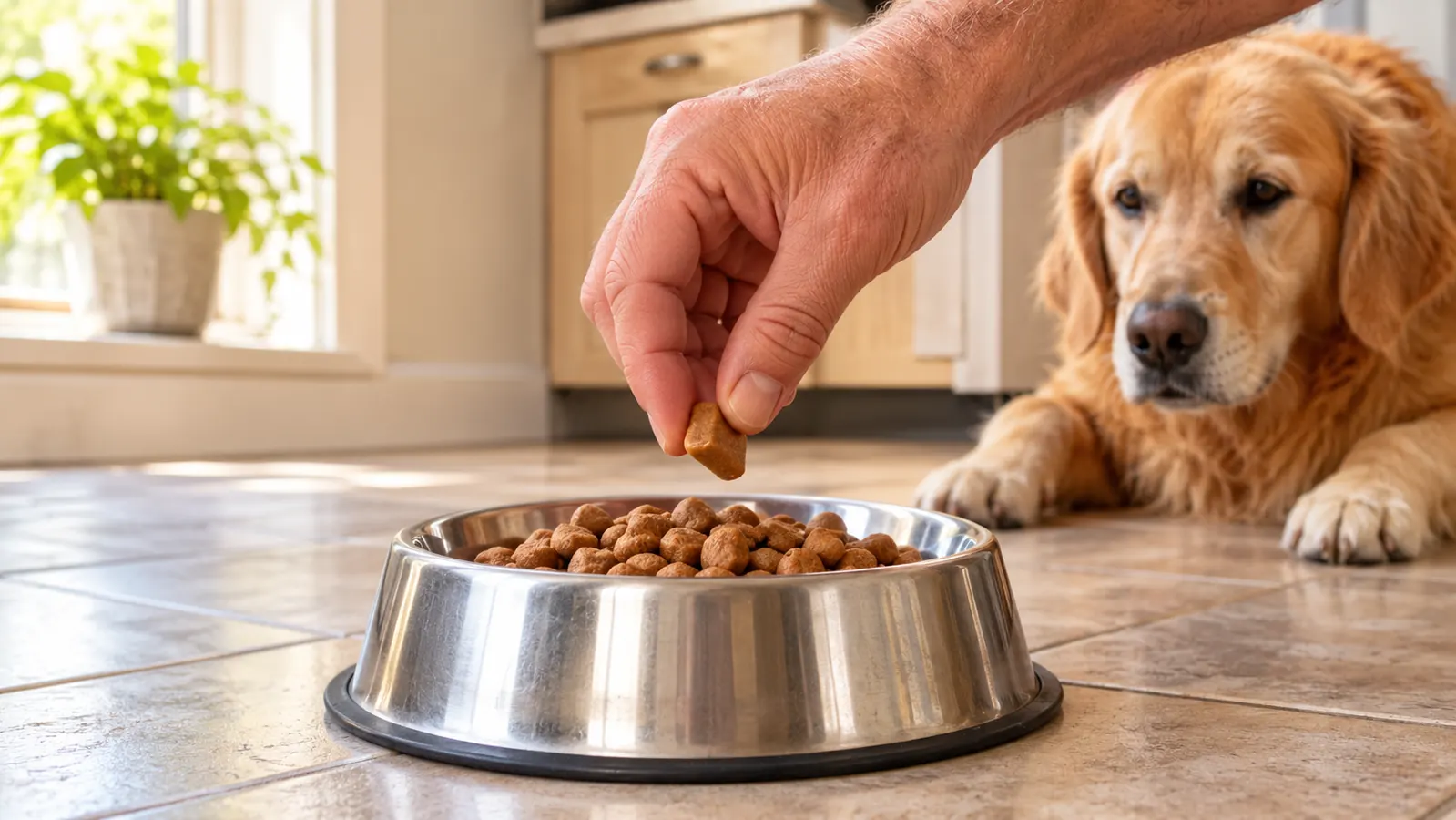
The routine never changed, which is the whole point. I split the label amount for his weight across his two meals, morning and evening kibble, and our vet checked that amount at the diagnosis visit so I was not guessing at it in my kitchen. The chews are soft and chicken flavored, and Biscuit treated them like food. I never had to hide one in peanut butter or crush one into a bowl, and anyone who has owned a Lab knows that is half the battle.
The first two mornings I did it wrong. I dropped the chews on top of his kibble like a garnish, and Biscuit ate around them, then stood there looking at me like I had insulted his grandmother. Labs will do that. From the third morning on I handed him the chews first, one at a time, and set the bowl down after. That took about fifteen seconds and it never failed again for three months. Small thing, but if you are reading this with a tub on your counter and a dog who has lost interest, try the hand before you decide the chew is the problem.
The tub is listed at 1.4 pounds and about nine inches tall, so it sat on the shelf above his kibble bin. A 180-count tub covered the full three months without a reorder, which sounds like a small thing until you have tried to keep a supplement going for a dog who cannot tell you whether it is working. A tub you have to remember to reorder every few weeks is a tub that quietly stops.
I also gave it a fair test. Same food, same walk schedule, same four brick steps down to the yard, nothing else added to his bowl. If you change three things at once you are not running a test, you are running a hope. I wanted to know what this one thing did on its own.
What's Actually in the Chew
The label lists 600 mg of glucosamine HCL, 210 mg of krill, and 280 mg of fish oil, and the product name carries MSM. Those are the ingredients most joint supplements are built around, and VETIQ puts them in a soft chew instead of a tablet you have to convince a dog to swallow.
The listing also mentions skin and coat support and digestive health among its uses, which is normal for a formula built on fish oil and krill. I did not buy it for his coat. I bought it for his hips. And I want to be plain about one thing: this is a supplement, not a pain medication, and not a substitute for a diagnosis.
Read the label yourself and ask your vet about the amount for your dog's weight. I am a coach with a stiff dog, not a veterinarian. Dosing is a conversation you should have with the person who has actually seen your dog's x-rays. Our vet's read on this one was simple: fine to try, come back in three months and we will look at him again.
What Changed Over the Three Months
Nothing happened for the first two weeks. I want that on the record, because a lot of reviews make it sound like day three. Weeks one through three, Biscuit got up the same way he always had: a small hitch, a pause, then up.
Around week six, I started noticing the mornings. He sleeps on a bed in the hall on the laminate, and he had gotten into the habit of lying there a beat longer, then pushing up in two stages. One Tuesday he came up in one motion and walked to the door. I did not throw a party. But I noticed, and I kept noticing for the next week or so.
I kept a note on the refrigerator door, which is the least scientific thing in this review and also the most useful. Every morning I wrote one word on it: smooth, or hitch. September was mostly hitch. October flipped somewhere around the second week. Twenty-one mornings that month, and fifteen of them he came up off that laminate in one motion with no pause at the top. Six he did not. November ran about the same. That is not a clinical trial, it is a coach with a magnet on his fridge, but it is more than a feeling, and it is the reason I finished the tub instead of quitting in week three and calling the whole thing nonsense.
That was the ceiling of it, honestly. From week six through the end of the tub in early December, his mornings were a little easier and his attitude on the leash was good, and he was still stopping at the tailgate of the truck and thinking it over before he jumped. Three months of a supplement did not touch that. Our vet saw him at the December recheck, said the small change was consistent with what she would expect from a glucosamine product, and suggested we move to a more studied formula. That is why I stopped. Not because it failed.
What Didn't Change
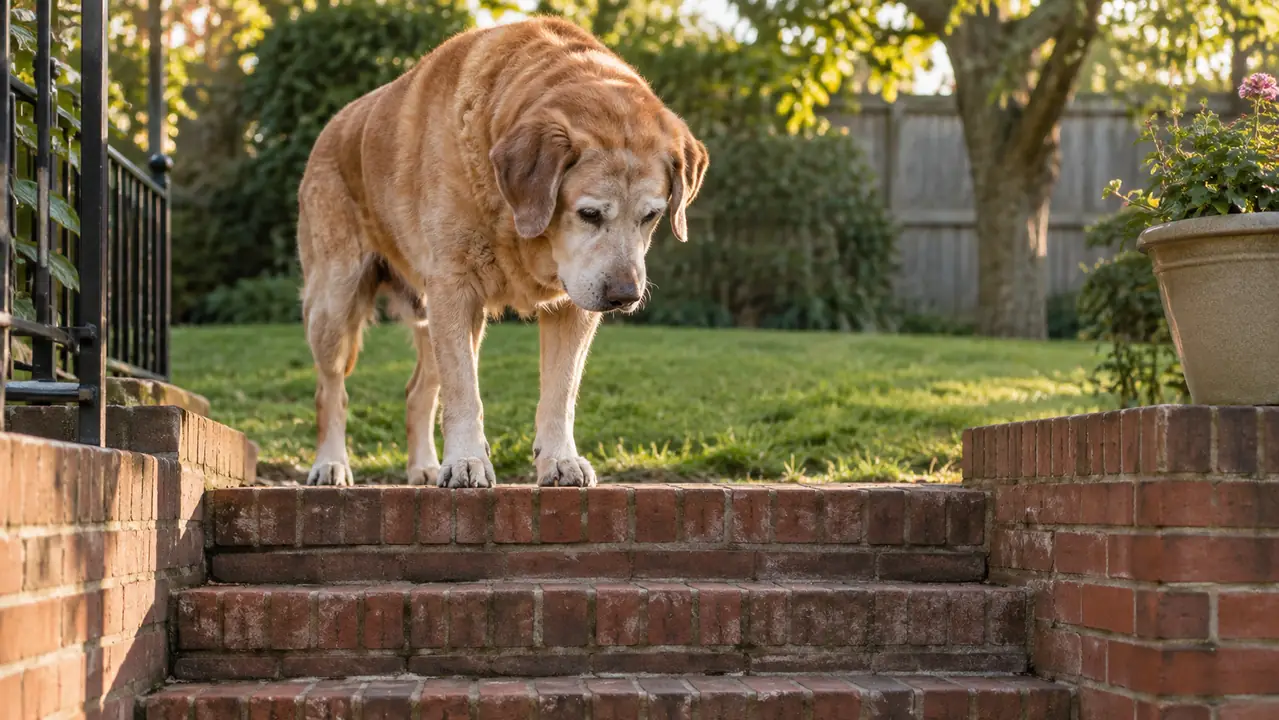
The four brick steps down to the back yard stayed his least favorite part of the day. He takes them one at a time, front feet then back feet, and he still does. The truck is the same story. He wants to go. He stands at the tailgate and works up to it.
That is the part I want to be honest about, because it is the part that decides whether a supplement is worth your money. VETIQ made the easy stuff easier. It did not make the hard stuff easy. If your dog is at the point where the hard stuff is the whole day, this is probably not the product that gets you out of it, and you should be talking to your vet about more than a chew.
The tailgate on my truck sits about thirty inches off the driveway and that number has lived in my head since September. I tried a folding ramp first. It slid on the concrete, Biscuit looked at it the way he looks at the vacuum cleaner, and it has been leaning in the garage ever since. I tried lifting him, which lasted exactly one attempt and did my lower back no favors. What works instead is a rubber mat on the driveway so his back feet do not skate, and me standing at his shoulder with a hand under his chest while he decides. He still decides. It just takes him less time to decide than it did in September.
The Rest of the Plan Mattered More Than the Chew
Our vet gave me three things at that September visit, and I have been honest with myself since that the other two did more work than the tub did. The first was the weight. Biscuit came down from 84 pounds to about 78 over the last year on smaller portions and fewer scraps from my plate, and I would put that change up against any supplement on the market.
The weight part deserves its own paragraph because it is unglamorous and it worked. Our vet put him on the scale at the September 2025 visit and he read 78, down from 84 the year before. I got there with a one-cup measure and a kitchen scale instead of eyeballing a scoop. Two level cups of his large-breed kibble in the morning, two at night, and the table scraps stopped except for the odd green bean. He acted like I had cancelled Christmas for about ten days and then he got over it. Six fewer pounds is six fewer pounds to carry down four brick steps.
The second was the walking. We swapped the long fetch sessions for two shorter, steadier walks a day, which is a hard sell to a Lab and a harder sell to me. He still gets his sniff time. He does not get forty minutes of stop and start on the ball anymore.
The third was the supplement, and it came third for a reason. The camping trips changed too. We still go out to the north Georgia state parks most weekends from spring to fall, and he rides in the back seat of the cab, but he stays with our neighbor Dale on the long hiking weekends now. That was not a decision a chew could make for me.
The Tradeoffs I'd Want a Friend to Know
A 180-count tub is a commitment. If you have a picky dog who turns his nose up at a chicken soft chew, you now own a large tub of them and a problem. Biscuit is not that dog. Mine would eat a phone book if I put it in his bowl, so the flavor risk was zero for us and might not be for you.
The other tradeoff is softer. When the entry cost is low, it is easy to tell yourself to give it more time, and more time is easy to say. What actually told me the truth was our vet in December, not the tub in my pantry. If you are the kind of person who will let a supplement run for eight or nine months without a check-in, set the recheck appointment when you buy the tub.
What I Liked
- Soft chicken-flavored chew that most dogs take as a treat, no pill pockets or crushing required
- A 180-count tub covered three full months for a 78-pound dog at the label amount
- Combines glucosamine HCL, krill and fish oil in one chew instead of separate powders
- A well-reviewed, low-cost place to start while you and your vet work out a plan
- Biscuit never once refused it, which is more than I can say for the tablets we tried later
Where It Falls Short
- Took about six weeks before I noticed anything, and what I noticed was small
- Did nothing for the harder stuff, the truck jump and the four brick steps
- A supplement, not a pain medication, and no substitute for a diagnosis
- A big tub to be stuck with if your dog will not eat a chicken soft chew
- Our vet moved us to a more studied formula after three months, so it was not the long-term answer for us
Around week six he came up off the laminate in one motion instead of two. That was the whole win, and I will take it.
Who This Is For
This is for the person who just walked out of a checkup with the word arthritis in their head and no plan yet. If your dog is stiff after a nap, slow on the steps, and still happy to go for a walk, you are exactly where I was in September, and this is a reasonable, low-risk thing to try while your vet keeps an eye on him.
It is also for the budget-conscious owner who wants one chew that covers glucosamine, krill and fish oil instead of three separate containers on the counter. And it is for the dog who will not take a tablet. That matters more than the label does. A supplement a dog refuses is worth nothing.
Who Should Skip It
Skip it if your dog is already at the stage where he will not rise without help, or if he is limping on one leg rather than stiff on both. That is a vet visit, not an Amazon order, and it may be more than a supplement can answer. Skip it if your dog has food sensitivities you have not sorted out, since this is a chicken-flavored chew and a fish-based formula.
And skip it if you want a fast answer. Three months is the shortest honest test I can describe, and if you are going to judge it at ten days you will talk yourself out of a product that was never going to show you anything in ten days. Ask your vet for the recheck date before you open the tub.
What I'd Tell You Over the Fence
If you lived next door and asked me, I would say this: VETIQ is a fair starting point, not a finish line. It bought Biscuit some easier mornings for three months and it cost me very little to find out. I would buy it again in that same spot, the week of the diagnosis, with a vet appointment already on the calendar. I would not buy it expecting the truck to get easier. Three months later we were on something else, and Biscuit is steadier now than he was in September, but he is still a ten-year-old Lab with arthritis in both hips. Nobody sells you a cure for that. You buy him time and easier mornings, and you take the ones you get.
Three Months and 180 Chews to Find Out If It Helps Your Dog
Biscuit's mornings got easier around week six. Yours might, and finding out is a small bet. Buy the tub, book the recheck, and let your vet be the one who calls it.
Amazon Check Today's Price on Amazon →