
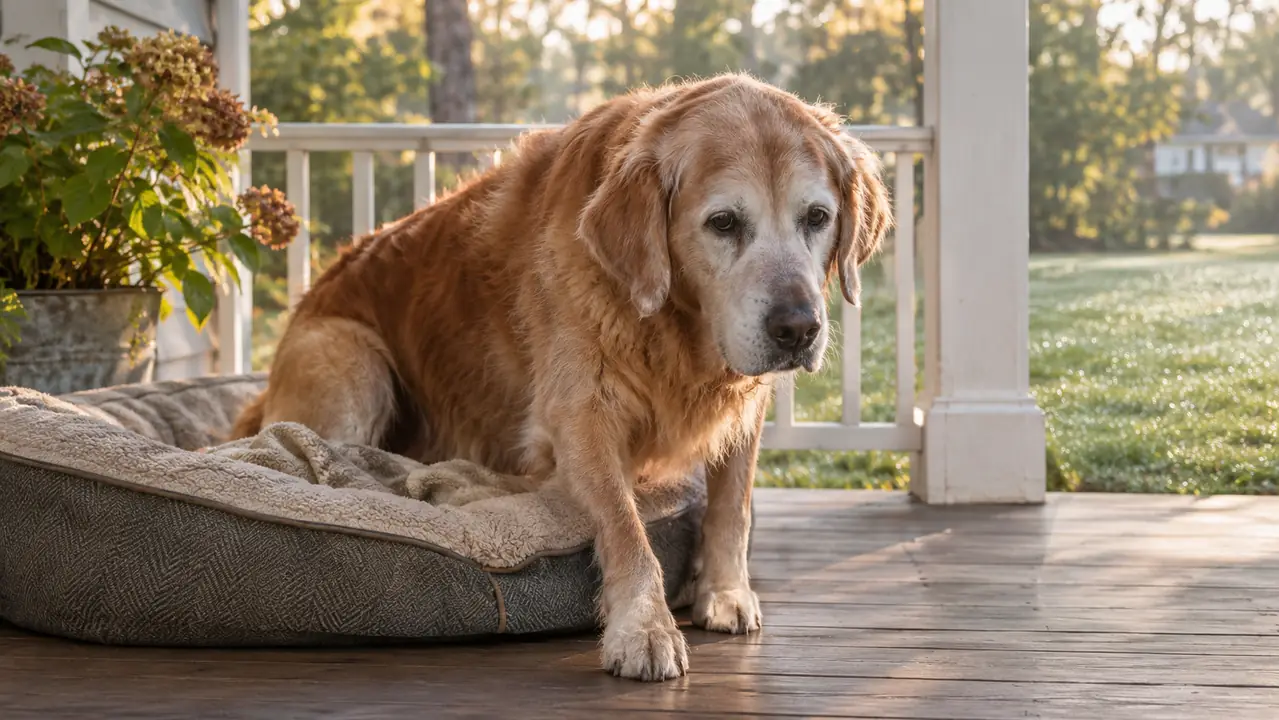
Biscuit used to beat me to the back door. He is a ten-year-old yellow Lab, about seventy-eight pounds, and for most of his life he was up and clicking across the laminate before my feet hit the floor. Now I hear him first. A long pause, a shift of weight, then the sound of him getting up in stages, front end first and back end catching up. At his September 2025 checkup our vet looked at the x-rays and called it what it was: mild arthritis in both hips.
When mornings start like that, you want to do something that same day. I know I did. I ordered a 180 count container of VETIQ Glucosamine Hip & Joint Chews for Dogs before I had finished my coffee, because it was well reviewed, it was a soft chew, and the chicken flavor meant I could hide it in his dinner if he turned his nose up. I am not going to tell you it gave me my puppy back. What I will tell you is that it gave me a place to start, and the routine I built around it is the part that actually changed our mornings.
The First Chew I Bought for an Arthritic Lab, and Still Recommend as a Starting Point
Soft chews with glucosamine, fish oil and krill, plus MSM, in a chicken flavor. 180 count container. If your dog is stiff getting up and your vet has cleared a joint supplement, this is an easy, honest place to begin.
Amazon Check Today's Price on Amazon →Step 1: Get the Diagnosis Before You Buy Anything
Here is the part I would underline twice if I were handing this to you on paper. Do not start with a supplement. Start with a vet who can put hands on your dog and, if it is warranted, take an x-ray. I had been telling myself for months that Biscuit was just slowing down because he was nine. Our vet found mild arthritis in both hips in September 2025 and laid out the plan in three parts: a joint supplement, a lean weight, and steady short walks. Two of those three cost nothing at all.
That appointment also gave me a baseline I could measure against later. She walked him up and down the hallway, watched him rise from the floor, felt both hips, and asked me when he was stiffest. The answer was mornings, and the evening after a long day outside. If I had never gone in, I would have spent the next year guessing at whether anything I bought was doing a thing, and I would have had no way to tell a bad week from a bad product.
One more thing about that visit, because it matters more than the chew. She asked what he weighed and told me plainly that the best thing I could do for those hips was take weight off them. He was eighty-four pounds then. He is about seventy-eight now, down over the last year on smaller portions and fewer scraps off my plate. That happened alongside the chews, not because of them, and I would be lying if I handed the container the credit.
Step 2: Match the Chew to Your Dog and Read the Label
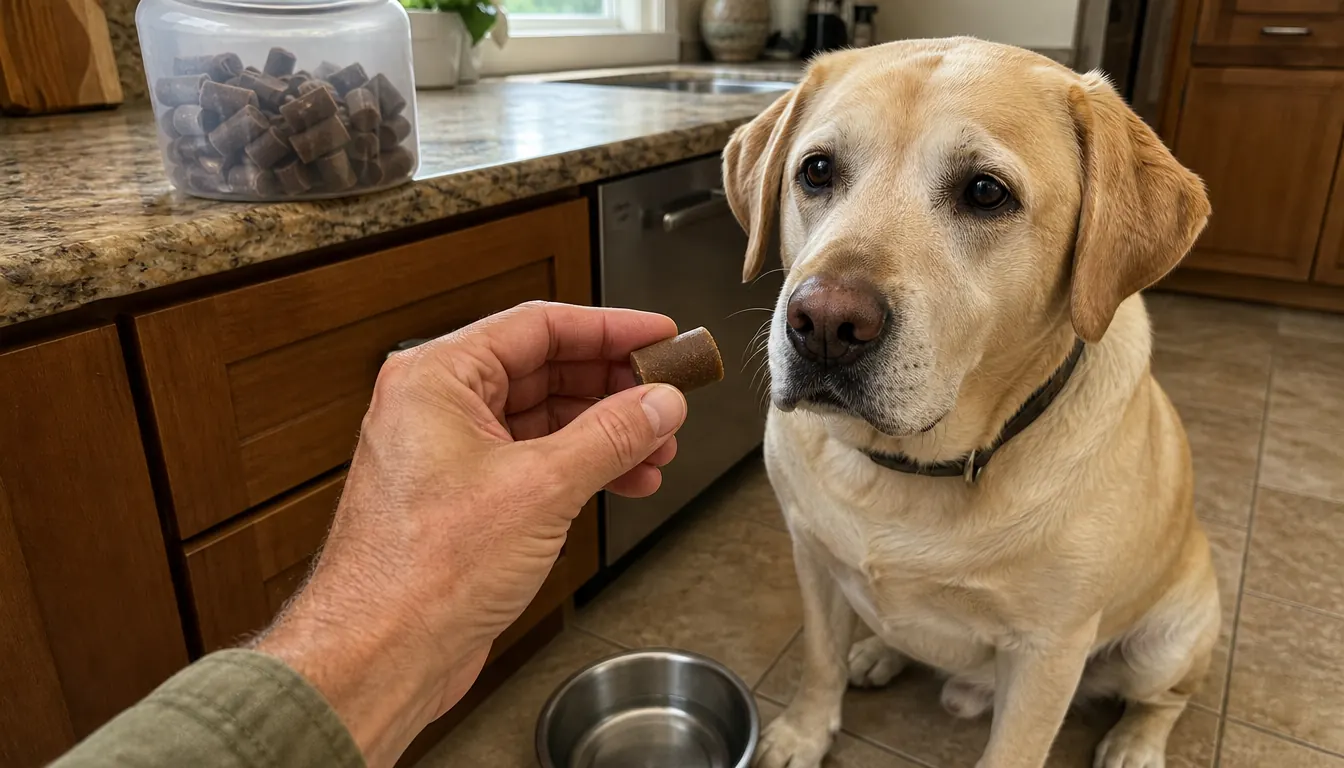
The joint chew aisle is loud and crowded and half of it is marketing. What I liked about VETIQ as a first purchase is that the formula is short and readable: glucosamine, fish oil and krill, with MSM in there, in a soft chew. The 180 count container runs about 3 by 7.1 by 9 inches and roughly 1.4 pounds, so it takes up one corner of a shelf and does not become the thing you are always moving out of the way.
I am not a vet and I am not going to rank ingredients for you like I have a lab coat in the closet. What I can tell you is what I did. I brought the label to our vet and asked whether it was reasonable to try, and she told me the amount for his weight off the label and said to give it a fair run. That is the only way I would start any supplement, for a dog or for myself. Guessing at amounts on an arthritic old Lab is not something I was willing to do.
The chew itself was easy, which sounds small and is not. Biscuit is food motivated and not picky, so a soft chew went down like a treat. If your dog is the suspicious type, the soft texture is forgiving: you can pinch it into pieces and work it through kibble, which a friend of mine does with his terrier. A chew your dog refuses is a chew that does nothing, and a hard tablet that gets spit on the floor twice a day will wear you both out inside a week.
Step 3: Give It at the Same Time Every Day
Consistency is the whole game with something like this. I gave Biscuit his chew in the morning with his kibble, same time, same bowl, every day from September into early December 2025. Not because morning is magic. Because morning is when I am home, when I feed him anyway, and when I still have the patience to notice what I am seeing. Pick the meal you never skip and attach the chew to it.
A joint chew is not a painkiller and nobody should expect a different dog on day three. Our vet told me to give it weeks, not days, and she was right. Around week six I noticed the pause before he stood up after a nap was a little shorter. That was the entire change. It was not dramatic and it was enough for me to keep going to the end of the container.
Do not double up. If your dog is already on a joint product, or your vet has him on something prescription, do not stack a second glucosamine chew on top because you are impatient and want to see something move this week. I run one plan at a time with Biscuit, on purpose. Call the clinic and ask. It is a two minute phone call and it saves you a bad week you will blame yourself for.
Step 4: Fix the House and the Routine Around the Chew
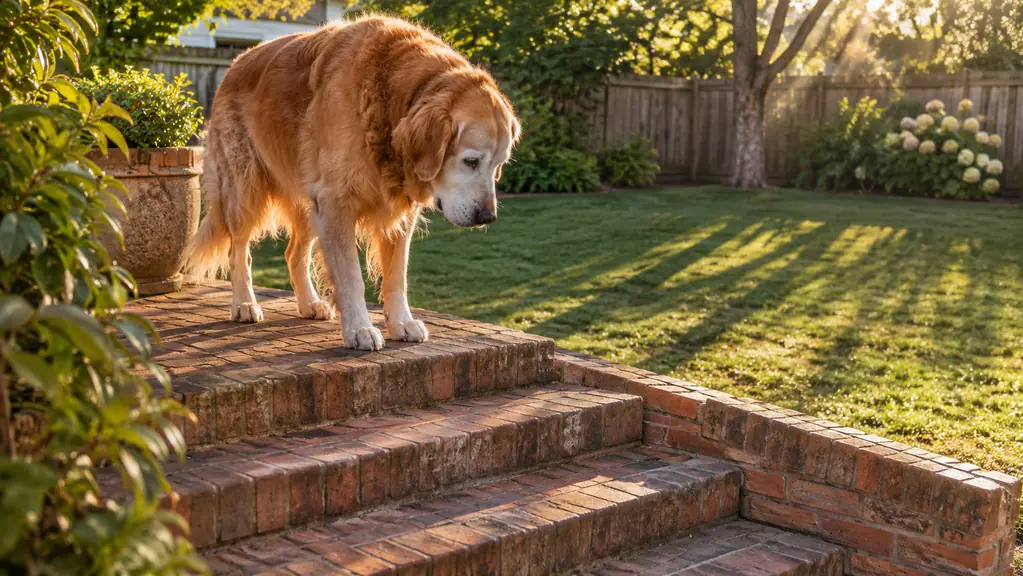
A chew is not a whole plan. That is the least exciting sentence in this article and the most true one. The four brick steps down to our back yard were the first thing I changed. Instead of letting him barrel down after a squirrel, I go out first and he follows at his own pace. It added maybe ten seconds to my morning and it took a lot of scramble out of his.
Inside, I put a couple of runners from the hardware store over the slick stretch of the hall. Laminate is fine for a young dog and a skating rink for an old one. I added a bed with real support in the room where he naps, and I made a rule that he does not jump out of the truck on his own anymore. He rides in the back seat of the cab and I lift him down. He tolerates this with the dignity of a dog who knows he is being helped.
Walks got shorter and more frequent. Twenty minutes twice a day beat one long loop where he came home sore and slept it off. I warm him up with a slow lap of the yard before we go anywhere, and I stop when he stops sniffing and starts lagging behind me. That last one is the signal I trust most. A dog that quits sniffing is a dog that is finished, no matter what the clock says.
Step 5: Track What You See and Take It to the Vet
Keep a note on your phone. Mine was three lines: the date, what I saw that morning, anything different. Most days said some version of the same thing, which is the point. The value shows up in the weeks where something shifts and you can point to it, instead of vaguely remembering that he seemed better in the spring and having nothing to back it up at the next appointment.
Here is my honest ending to the VETIQ stretch. At his December 2025 recheck, our vet suggested moving him to a formula she had more research on, and I did. I still think VETIQ was a fair starting point and I would do it again from the same spot, because it got me off the couch and into a routine while I learned which questions were worth asking. The chew did not fail. The plan just moved forward, and that is normal.
If your dog gets worse, or goes off his food, or starts limping on one leg instead of both, stop guessing and go in. Stiffness that arrives suddenly is not the same animal as the slow stiffness of an old dog on a cold morning, and it is not a job for a container of chews and a hopeful owner.
Around week six the pause before he stood up got a little shorter. He still hesitated at the truck, and I am not going to pretend otherwise.
What Else Helps
A few other things earned their place in the routine. Our vet added a liquid fish oil in January 2026, and that one still runs alongside whatever chew he is on, because fish oil is not a glucosamine product. One pump on his morning kibble at the label amount for his weight, bottle in the fridge door after opening. It is the only thing I have ever run in tandem with a joint chew, and I asked before I started it.
Weight is the other lever and it is free. Eight pounds off an old Lab is eight pounds his hips do not have to carry up the same four steps every morning. Smaller portions, fewer scraps, and a scoop that is level rather than heaped. I wish it were more complicated than that, because then I could sell you something.
Warmth helps too. On cold north Georgia mornings Biscuit gets up slower than he does in July, so he goes out to the yard first thing and comes back in to a warm spot before we do anything else. Not scientific, just what I see. And I keep the recheck on the calendar. Once a year became twice a year after the diagnosis, and it is the best insurance I buy for him.
Start With the Chew, Then Build the Rest of the Routine Around It
Soft chews with glucosamine, fish oil, krill and MSM, chicken flavored, 180 count. Ask your vet about the amount for your dog's weight, give it weeks rather than days, and get the steps and the weight sorted at the same time.
Amazon Check Today's Price on Amazon →