
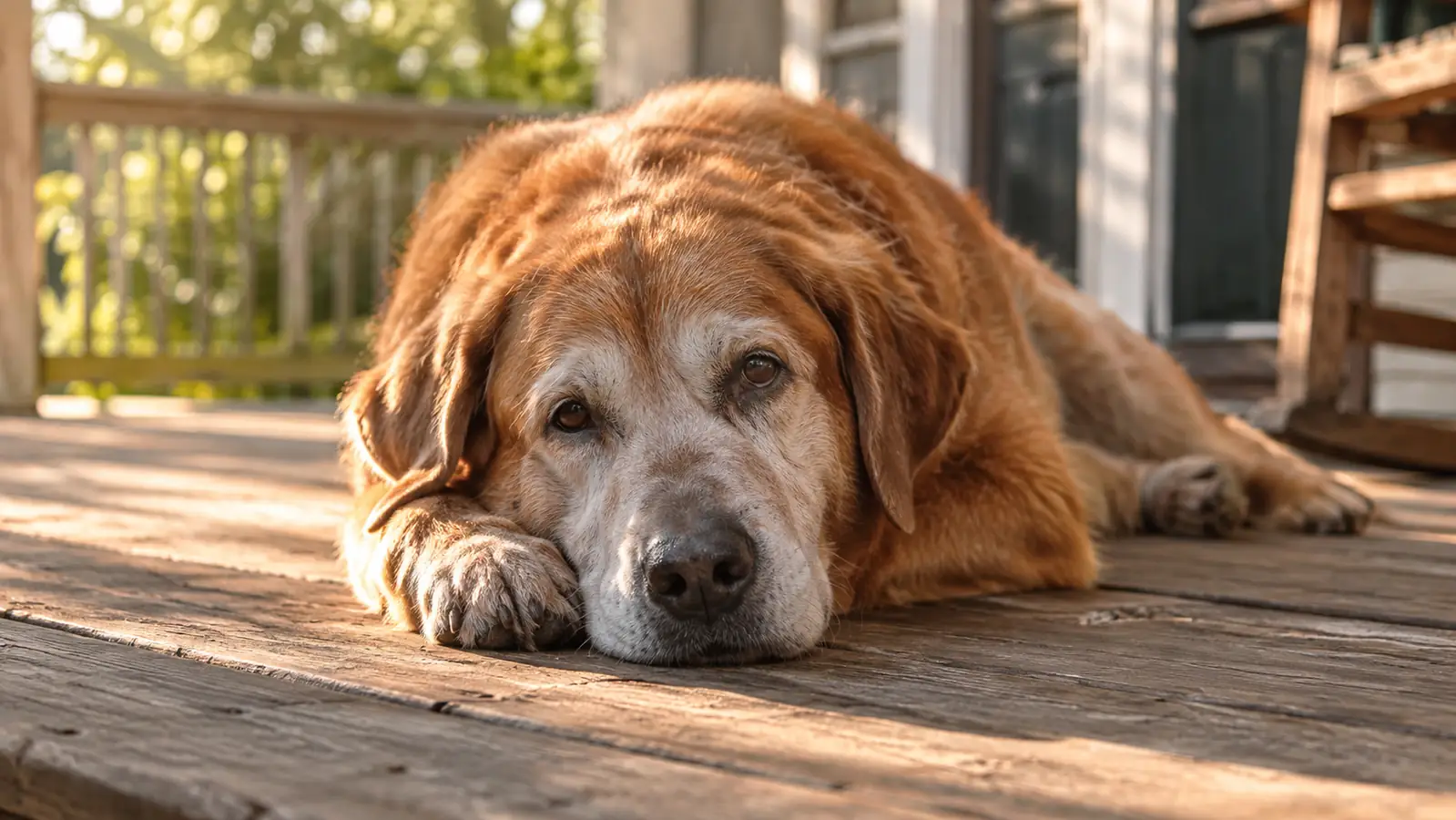
For about a year, the hardest part of my day was watching Biscuit stand up. He is a yellow Lab, ten years old, about 78 pounds, and he spent most of those years fetching, camping, and riding in the truck like he had somewhere to be. Then last September our vet looked at his x-rays and used the word arthritis for both hips. Since then there is a pause before he rises, a slow shuffle across the laminate, and a long look down the four brick steps to the back yard.
I tried the waiting game first. I figured he was stiff and it would pass. It did not pass. Then I bought the cheapest well-reviewed chew on the listing and it got us a little. What actually moved the needle was a plain routine our vet handed me on a notepad: one joint supplement, a leaner dog, and short walks on a schedule. Cosequin, made by Nutramax Laboratories, was the supplement at the center of that stretch for us, roughly December through March, and it is the one the other parents ask me about after practice.
The Chew That Got Biscuit Off the Floor and Back Into the Truck
Cosequin chewable tablets are what our vet pointed to first, and the formula that got a stiff ten-year-old Lab rising easier in about five weeks. Ask your own vet whether it fits your dog before you start.
Amazon Check Today's Price on Amazon →Before Step One: Know What You're Actually Dealing With
Here is the part nobody tells you at the pet store. Stiffness in an old dog is a symptom, not a diagnosis. It can be arthritis, and in Biscuit's case it is. It can also be a torn ligament, a disc problem, or something a vet needs to put hands on to find. Start a supplement without knowing the cause and you can spend months guessing while something else goes untreated.
So the routine below assumes you have already had the conversation. Ours happened at a September checkup. Biscuit was nine, he had slowed down on the back steps, he hesitated before jumping into the truck, and our vet found mild arthritis in both hips. Her advice was unglamorous: a joint supplement, a leaner dog, and steady short walks. That was it. No procedure, no prescription, no shopping list. I have followed a lot of coaching advice over twenty years that was worse than that.
I also want to set the bar honestly, because the reviews out there do not. Biscuit is still a ten-year-old Lab with arthritis in both hips. He is steadier, not cured. He still takes a beat before he stands. What changed is that the beat is shorter, the truck is not a debate anymore, and he is back to forty minute walks. That is the whole win, and it is a real one.
Step 1: Get Your Vet to Confirm the Problem Before You Spend a Dime
I got this half wrong myself, so take it from me. I bought a supplement off Amazon within a week of the diagnosis, before I had asked a single follow-up question. It happened to be fine. That was luck, not judgment.
Ask three things at that appointment. What exactly did you find, and where? Is there anything in his exam that means we should be careful about loading him up with joint supplements? And what does success look like in eight weeks, so I know whether to keep going? That third question saved me from a year of wishful thinking. Our vet said she wanted to see him rise easier after a nap and take the steps with less hesitation. Not run again. Rise easier. That was the bar I was measuring against.
Write the answers down. You will forget them by week three, and then you will be on a forum at midnight deciding whether your dog blinked more than usual.
Step 2: Choose One Joint Supplement and Give It a Full Eight Weeks
The first chew I bought was a budget glucosamine product, the cheapest thing with good reviews. We ran it about three months, September into early December. Around week six, mornings looked a little easier, but he was still stopping at the tailgate of the truck and thinking it over. At the December recheck our vet suggested a formula with more study behind it, and we switched to Cosequin chewable tablets from Nutramax Laboratories. I still think that budget chew was a fair starting point for the money. It just was not the one that got us where we needed to go.
Cosequin chewable tablets list glucosamine hydrochloride, sodium chondroitin sulfate, and MSM on the label. That is the entire reason our vet pointed at it. Those are the ingredients she trusts, in a formula she has watched work in other dogs. I am not going to pretend I understand the biochemistry of any of it. I understand that she has been right about my dog more often than I have.
The eight weeks matter more than the brand, and almost nobody finishes them. A joint supplement is not a pain pill. You do not get a change in an afternoon, and you will not get one by Saturday. With Cosequin the first real difference showed up around week five, when he stopped bracing himself to stand up off the laminate. Had I quit at week three because nothing was happening, I would have thrown away the only thing that worked that winter.
One supplement at a time, too. Do not stack two glucosamine products and then wonder which one did the work, because you will never know. The exception in our house is fish oil, which is not a glucosamine product and which our vet okayed alongside whatever chew he is on.
Step 3: Feed It the Way the Label Says for Your Dog's Weight
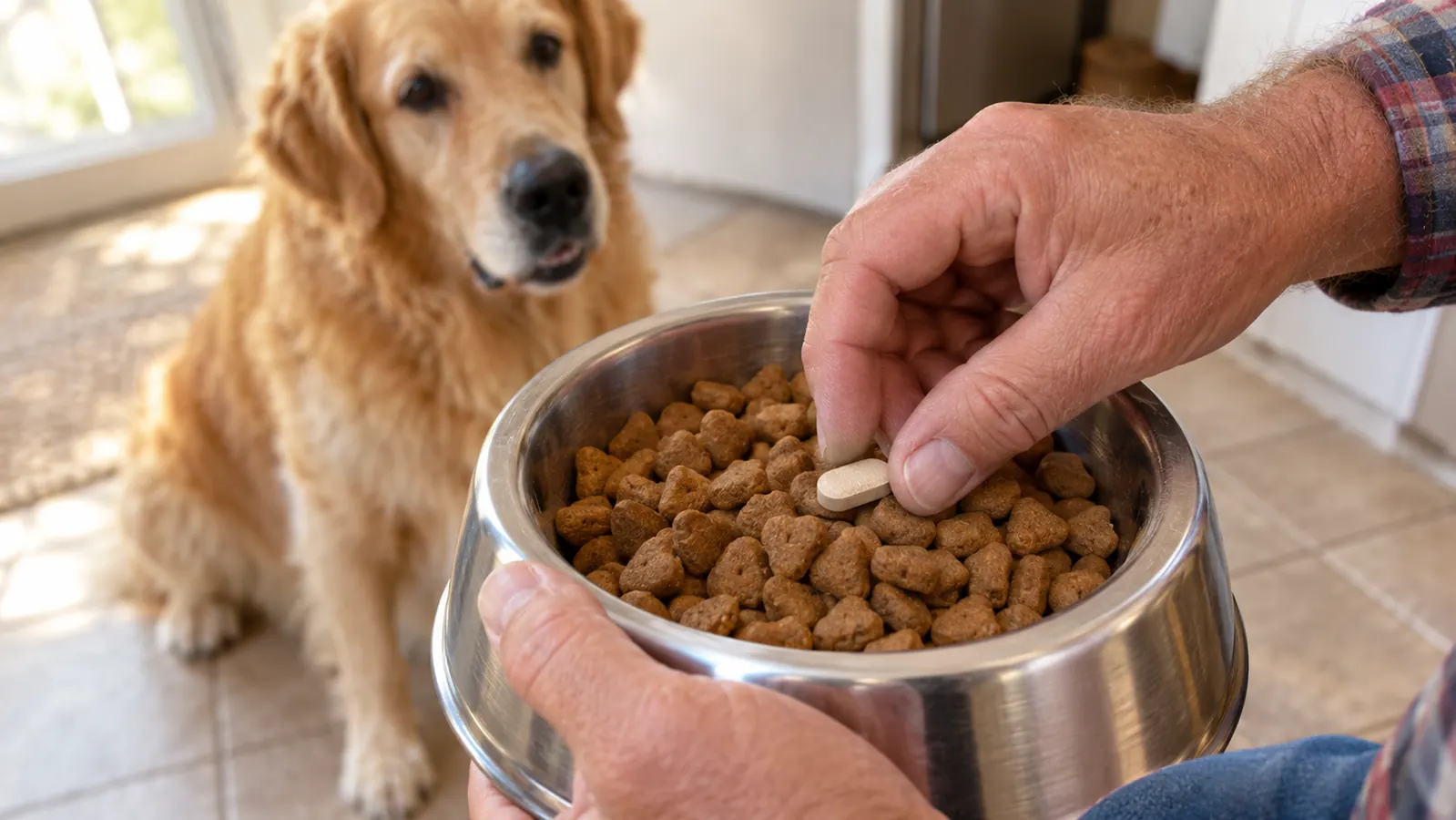
Cosequin chewable tablets from Nutramax Laboratories are a tablet, not a soft chew, and that ended up mattering for us. Biscuit takes his as a treat, whole, after his evening kibble, and he has never once questioned it. If your dog is the type who dissects everything before swallowing, crush it and stir it into the food instead. The label is the authority here, not me and not a thread you found at two in the morning.
Give it at the label amount for your dog's weight, and have your vet check that number against your dog. I am not going to hand you a dose for a dog I have never met, because I am a soccer coach and not a veterinarian. Ours checked the amount for a 78 pound Lab and that is the number we used.
Two practical things. Keep the tablets somewhere you will see them at the same time every day, because consistency is most of the battle and a bottle in a cupboard is a bottle you forget. And keep the routine boring. Same time, same order, every day, for eight weeks before you judge it.
Around week five he stopped bracing himself to stand up off the laminate floor. By February he was hopping into the back seat of the truck again, with a short pause first.
Step 4: Take the Weight Off Him Before You Buy Anything Else
This is the step people skip, and it is the one our vet put ahead of everything else. Biscuit was 84 pounds a year ago. She asked me to get him lean, so I cut his portions slightly and stopped the table scraps, and he has settled around 78. Same dog. Same hips. Noticeably less grunting when he gets up off the floor.
Every extra pound on an arthritic hip is a pound that has to be lifted several dozen times a day. That math is not complicated and it is the closest thing to a free win in this whole routine. If your dog is carrying extra weight, do that first. The supplement helps him feel better. The weight loss changes the load he is carrying while he does it.
Do it slowly, and do it with your vet's numbers rather than a guess from the internet. Cutting a senior dog's food too hard is its own problem, and you do not want to trade sore hips for an empty stomach.
Step 5: Move Him More Often, Not Farther
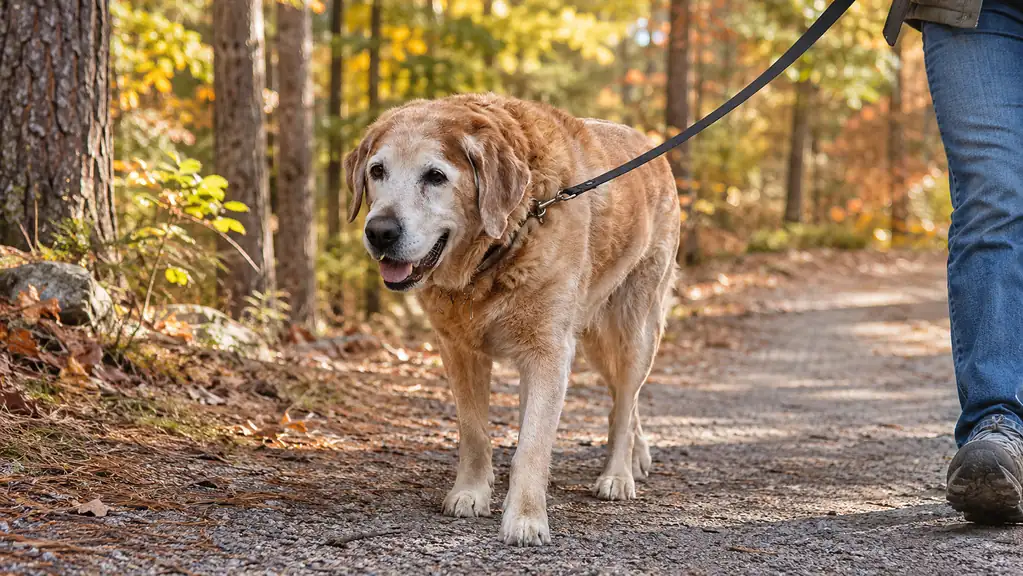
The instinct when your dog is stiff is to rest him. Our vet said the opposite, within reason. Short, frequent walks on flat ground beat one long hike. For us that meant two or three twenty minute loops around the neighborhood instead of the hour he used to get, and it meant retiring him from the long hiking trips with my friends. He stays home with Dale, our neighbor, on those. He does not love it. His hips do.
Camping changed shape too. We still go, about every other weekend from spring to fall, but we pick the easier parks now and I do not take him on the long trails. He rides in the back seat of the cab with the camper shell behind him and he is happier at camp than he is at home. It is the hiking part he sits out.
There are small changes around the house that cost nothing. I put a runner over the laminate in the hall so he is not scrabbling for traction when he turns. I let him set the pace on the four brick steps instead of hustling him along. And I stopped throwing the ball as far, which he has opinions about.
The truck was the last thing to come back. For most of that winter he would stand at the open door and think it over. By February he was hopping into the back seat again, with a short pause first. That pause is still there. I will take it.
What Else Helps
Fish oil is the other thing in our house. Our vet suggested a liquid omega-3 for pets back in January and we are still on it, one pump on his morning kibble at the label amount for his weight, the bottle kept in the refrigerator door. I cannot prove it did anything on its own and I will not claim it did. I keep it because she recommended it and because nothing about it has gone wrong in ten months.
Warmth helps more than people expect. On cold mornings Biscuit moves like a much older dog until he has been up for ten minutes. A soft bed off the cold floor and a slower start have both been worth more than any gadget I have bought him.
Keep the nails short. I never thought about this until our vet mentioned it. Long nails change how a dog stands, and a dog with sore hips does not need to be standing badly on top of everything else.
When to Stop and Call the Vet
If your dog yelps, refuses to put a foot down, stops eating, or goes off his back end, that is not stiffness and it is not a supplement problem. Call. Same if the stiffness gets worse over a few weeks instead of better, or if he is on any other medication, because interactions are real and I am not the man to sort them out.
And if eight weeks of a consistent routine gets you nothing, say so at the next visit rather than buying a bigger bottle. That is information, not failure.
What I'd Skip
Skip the urge to buy three things at once. Skip the reviews that promise a ten-year-old dog will run like a puppy, because he will not, and then you will blame the product when the truth is that arthritis is something you manage and not something you erase. Skip anything that tells you to dose your own dog without your vet. And skip the long hiking trips for a while. Biscuit still pouts about that one, but he gets up easier in the morning, and I will trade a pout for an easier morning every single time.
Three Months of a Tablet He Took Like a Treat
Cosequin chewable tablets from Nutramax Laboratories are what our vet pointed to, and what got a stiff ten-year-old Lab up off the floor without the brace. Ask your vet first, then give it the full eight weeks before you decide.
Amazon Check Today's Price on Amazon →