
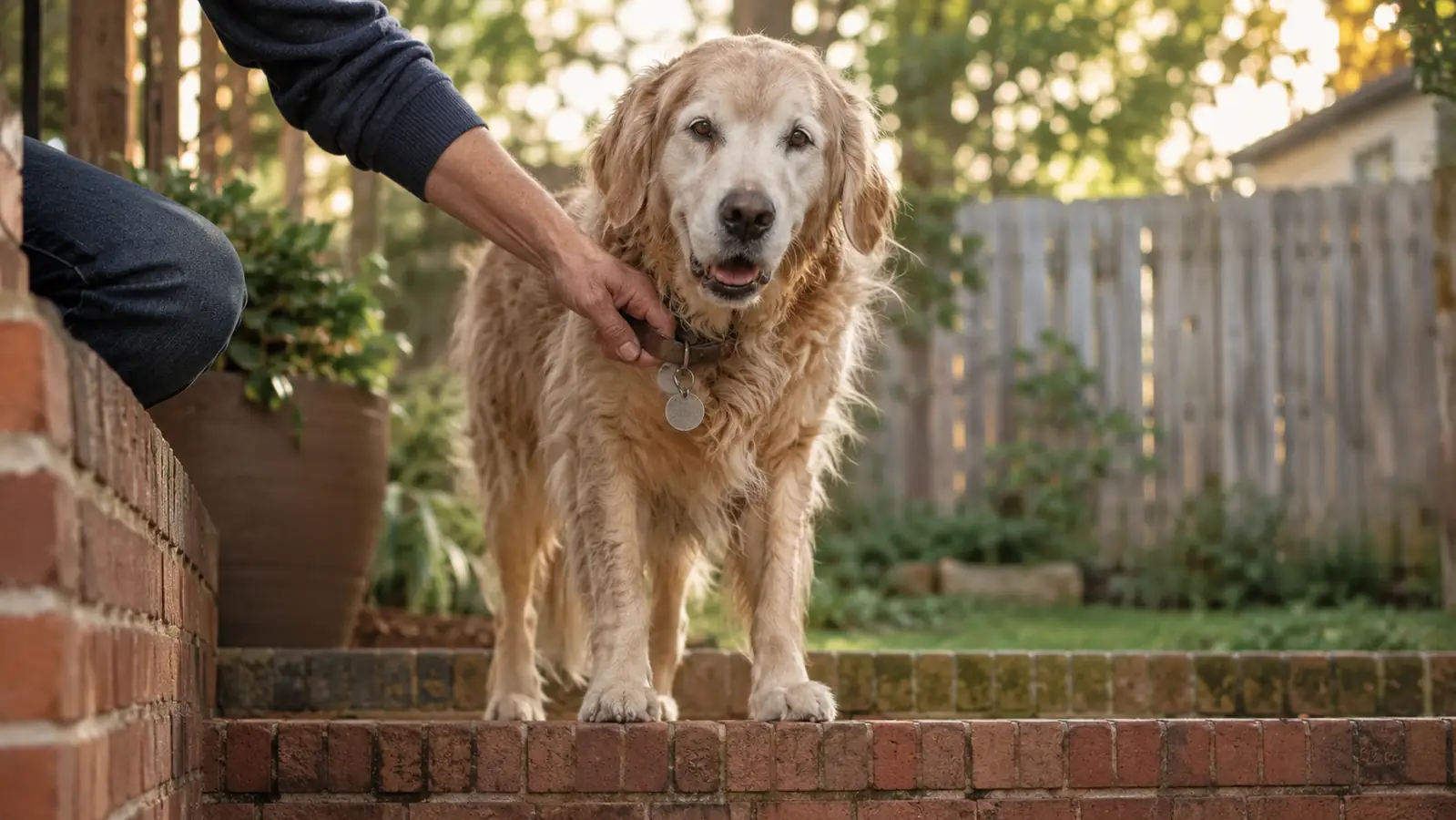
Biscuit turned nine and stopped beating me to the door. He is a yellow Lab, about 78 pounds after a year of smaller portions, and for most of his life he hit the four brick steps down to the back yard at a trot. Then came the September checkup and the word arthritis, mild, in both hips. Suddenly those four steps took planning. He would stand at the top, look down at the ground, and think it over. The truck was worse. He wanted to jump into the back seat of the cab and he kept starting and stopping, like he had lost the address. I did what most people do. I asked around at practice, heard the words fish oil about six times in one afternoon, and went home and bought a bottle. That was January. The bottle was Nordic Naturals Omega-3 Pet, and it is still in the refrigerator door ten months later.
Here is the honest version before I get into the how. Fish oil did not turn Biscuit back into a two-year-old. What it did, as far as I can tell, is make the mornings less of a negotiation. He gets off the floor after a nap with less of a pause. But the fish oil is one part of a stack that also includes a daily joint chew, a leaner weight, and short walks that happen whether it is raining or not. I am not a vet. I am a high school soccer coach in Marietta, Georgia, with sore knees of my own and one dog. Our vet is the one who suggested the fish oil in the first place, and she is the one who checked the amount. That is the order I would do it in, too.
What our vet suggested in January, and what I still buy
Nordic Naturals Omega-3 Pet is a liquid fish oil for dogs in an 8 ounce bottle, unflavored, with the EPA and DHA spelled out on the label instead of hidden behind one big number. At Biscuit's weight, one bottle goes a long way.
Amazon Check Today's Price on Amazon →Step 1: Get Your Vet in the Room Before the Bottle
Our vet is the first call, not the last. When I brought Biscuit in for that September checkup, she put her hands on both hips, watched him walk away from her and back, and told me it was mild arthritis on both sides. Then she laid out three things in order: a joint supplement, a leaner weight, and short walks that happen every day. The fish oil came later, in January, when I asked whether there was anything else worth adding. She said yes, omega-3s were reasonable, and told me to bring the label to the next visit so she could look at it. That is the part I would underline for anyone reading this.
There is a reason to start there and not with a search engine. Stiffness in a ten-year-old dog can be arthritis, and it can also be a dozen other things that a bottle of fish oil will not touch. Biscuit hesitating at the truck could have been his hips. It could have been a nail, a knee, or something in his spine. Our vet ruled that out with her hands and her eyes before I spent a dollar on anything. If your dog is stiff and has not had an exam, the exam is step one. Everything below happens after it.
Step 2: Read the Label Before You Read the Reviews
I bought Nordic Naturals Omega-3 Pet because of the back of the bottle, not the star rating, although 12,761 ratings did get my attention. What I wanted to see was the omega-3s spelled out, EPA and DHA, rather than a big number at the top of the label with nothing behind it. This one lists 1380 mg of fish oil and puts the EPA and DHA breakdown right there. The listing also says the oil is in the triglyceride form, which is the form that shows up naturally in fish, and that it is non-GMO, gluten free, dairy free, and made without artificial flavors or preservatives. I am not a chemist. I am a guy who reads labels at the kitchen counter, and this one answered the questions I had.
Two more label details matter when the eater is a dog. It is a liquid, unflavored, in an 8 ounce bottle, which is 237 ml, so it goes over kibble without turning dinner into an argument. And the allergen line says fish, which sounds obvious for fish oil and is worth saying out loud anyway: if your dog has a fish allergy, or you have never fed fish and do not know, ask your vet before you open it. The bottle is small enough to sit in the refrigerator door, and at the amount Biscuit gets, one bottle lasts a good while.
Step 3: Measure the Label Amount for His Weight, Then Leave It Alone
The temptation is to give more than the label says, because more sounds like it should work faster. It does not, and it can back you into a dog with loose stool and no interest in dinner. Our vet worked out the label amount for a 78 pound dog and wrote it on the bottle with a marker. I use that amount, once a day, in the morning. When Biscuit was heavier, the number would have been different, which is a good reason to weigh your dog at the clinic instead of guessing from the last time you picked him up.
I will admit I free-poured it once, back in February, when I was running late for a scrimmage. Nothing bad happened. But nothing good happened either, and I had no idea whether the amount matched the day before, which defeats the point of tracking anything. Now I measure it, every time, before the kibble goes down. It takes about four seconds, and those four seconds are the difference between a plan and a habit.
Step 4: Same Bowl, Same Time, Every Morning
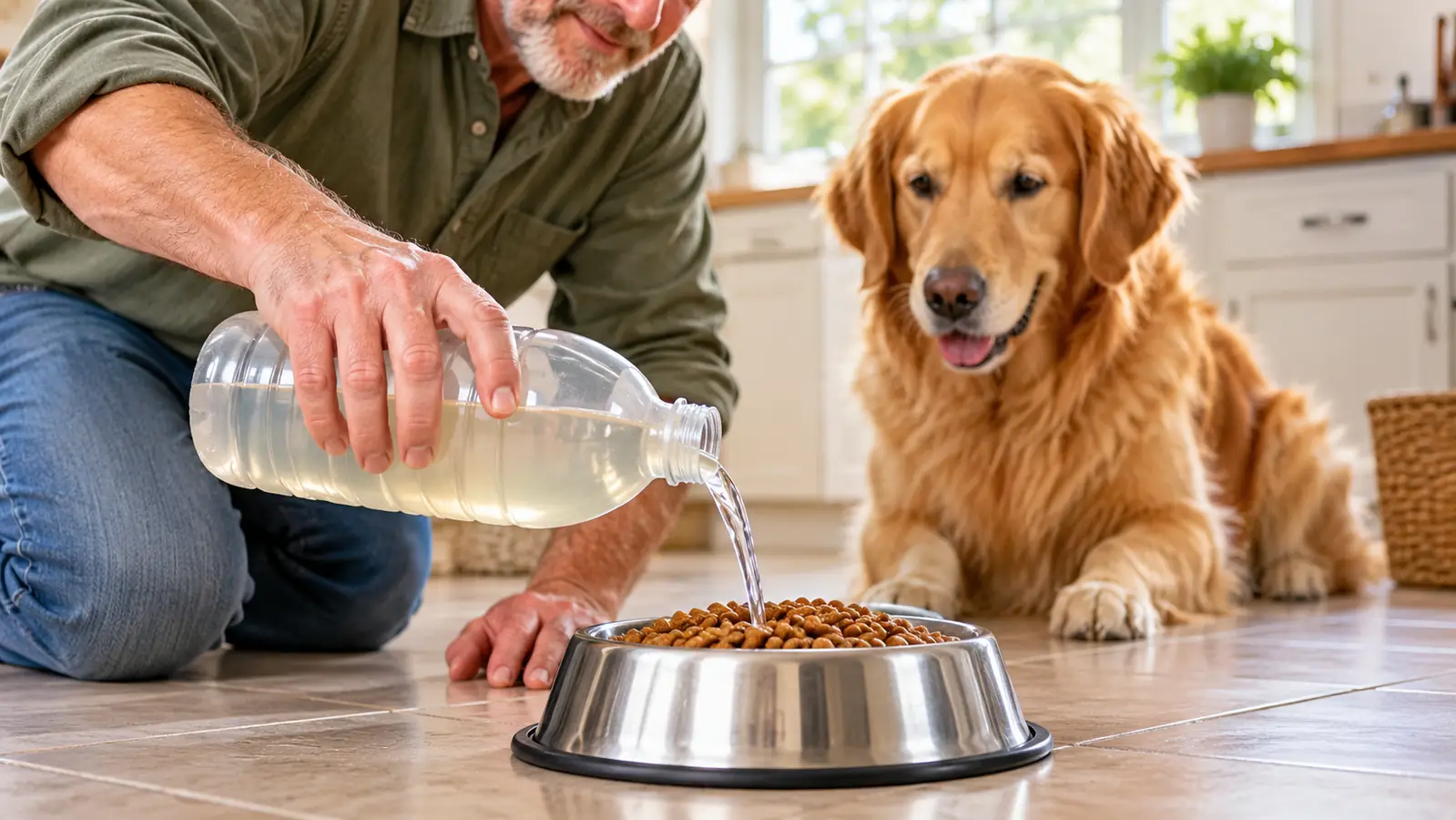
Biscuit eats a large-breed dry kibble twice a day, morning and evening, and the fish oil goes on the morning bowl. I put the kibble in, measure the oil over the top, and stir it through with a fork so it is not sitting in one puddle he can work around. He is food motivated enough that this was never a hard sell, but I still stand there and watch him finish the first half of the bowl, because a dog who walks away leaves the oil behind. If yours picks around it, a splash of warm water stirred in helps the kibble take it up.
The evening meal is the joint chew, which for us is a Dasuquin soft chew he treats like dessert. Keeping the two apart is deliberate. If everything went into one bowl and something went sideways, I would have no idea which thing caused it. One new item at a time, and the fish oil gets the morning slot to itself. The bottle lives in the refrigerator door, which is where it has been since January. I pull it out, measure, and put it back before I pour my own coffee.
He stopped standing at the top of the four brick steps like the drop was twelve feet. That took about six weeks, and it is the whole reason I still buy the bottle.
Step 5: Give It Eight Weeks Before You Judge It
Here is where I have to be careful with the story, because I did not run a study. I added the fish oil in January, and by then Biscuit was already five or six weeks into a joint chew that had made a visible difference. So I cannot tell you the oil alone did anything. What I can tell you is what changed over the following months: the pause at the top of the four brick steps got shorter, then mostly went away. He started jumping into the back seat of the truck again without the run-up. By late spring he was doing forty-minute walks instead of twenty.
The eight week mark is where I would draw the line for a decision. Not three days, not two weeks. Give it long enough that the novelty wears off and both of you are used to the routine, and write down what you actually see on the same day each week. I used the back of an envelope stuck to the fridge: how he got up after his afternoon nap, whether he hesitated at the steps, whether he hesitated at the truck. Four lines a week. It sounds like nothing. It is the only reason I can tell you any of this with a straight face instead of vaguely remembering that he seemed better.
Call your vet sooner than eight weeks if the stiffness gets worse instead of better, if he stops finishing meals, if his stool goes loose and stays that way, or if he starts limping on one leg instead of moving slow on both. And if eight weeks go by and nothing has changed, that is information too. Our vet's next move for us was not more fish oil. It was a different joint chew and a conversation about what we were actually trying to fix.
What Else Helps
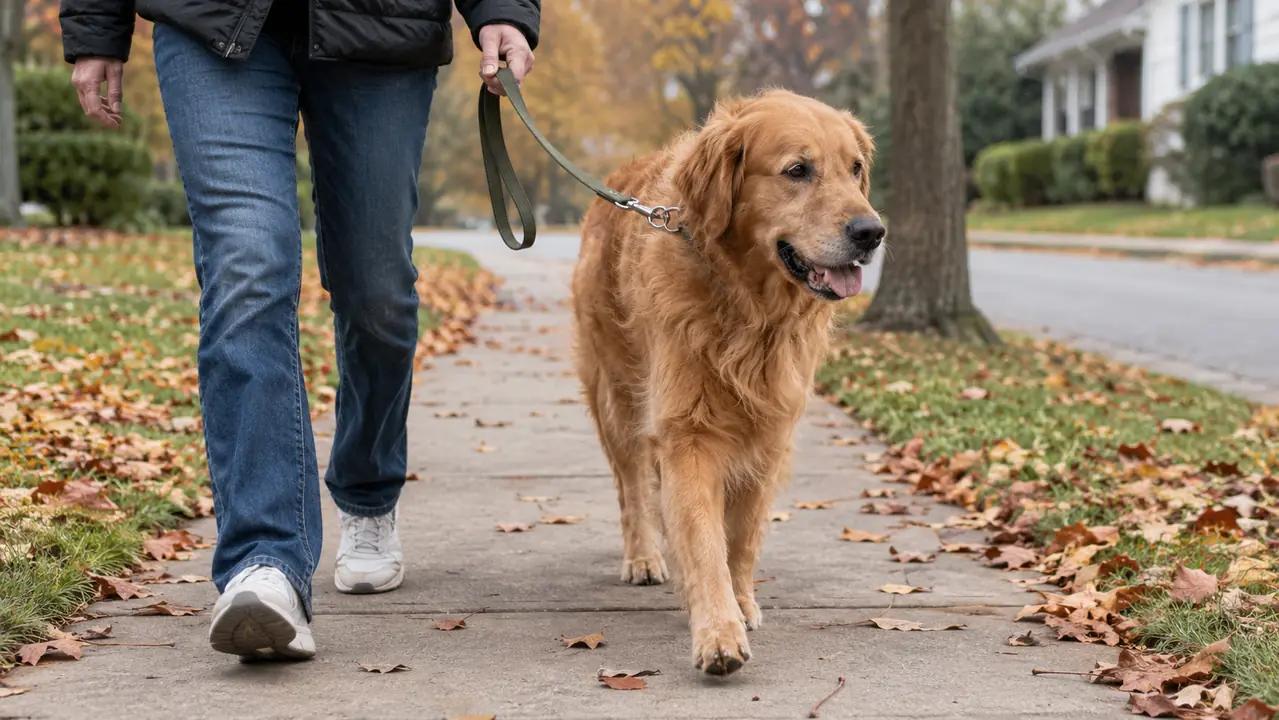
Fish oil was the third thing we changed, not the first. The first was weight. Biscuit came down from 84 pounds to about 78 over the last year on smaller portions and a hard stop on table scraps, and our vet was clear that those last six pounds did as much for his hips as anything in a bottle. The second was walking. Short, boring, daily walks on flat ground, twice a day, rain or shine. Not fetch, which is a stop and start game on a hard surface, and not the long hikes in north Georgia he used to live for. He comes on the easy camping trips now and stays with Dale, our neighbor, on the long ones.
The house got a couple of cheap fixes too. There is a runner down the hall now, because laminate is slick under a dog with sore hips, and it took one bad morning watching him scramble to go buy it. The four brick steps get a hand on his collar going down, which is as much for me as for him. And there is a ramp in the truck bed that he ignores about half the time and uses the other half. None of that is as interesting as a supplement. All of it is part of why a ten-year-old Lab still gets up on his own.
One bottle, one measurement, one morning bowl
If your vet says omega-3s are worth trying, Nordic Naturals Omega-3 Pet is the liquid fish oil that has been in my refrigerator door since January, at the label amount our vet checked for a 78 pound dog. Ask your own vet what that number looks like for yours.
Amazon Check Today's Price on Amazon →